
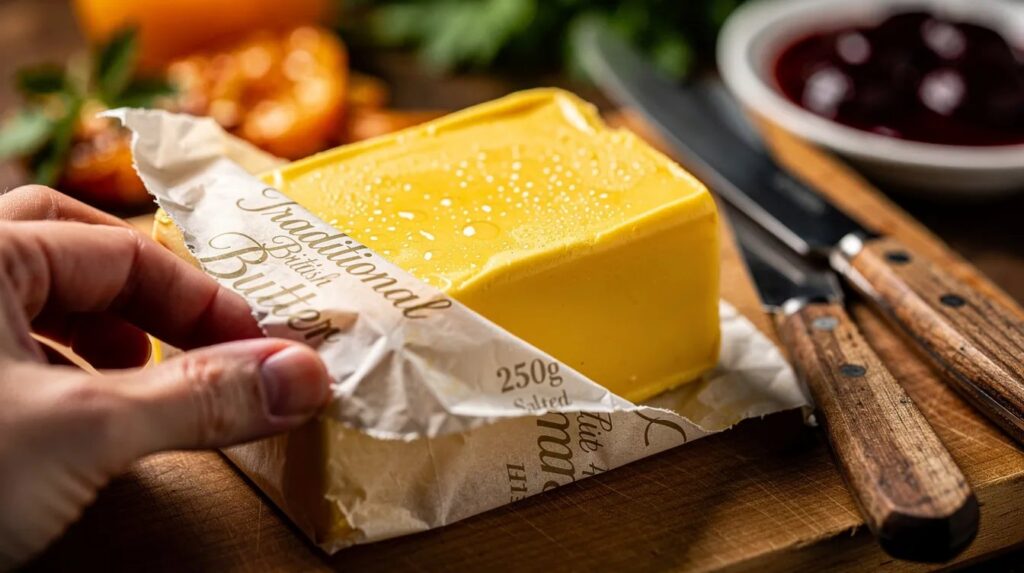
Spring is arriving just as the dairy aisle gets quietly interesting. A brand not traditionally associated with butter has launched what it describes as a first-of-its-kind product — and the food world is paying close attention. The timing feels right: as British kitchens shift toward lighter, more considered cooking after winter, a new kind of butter entering the scene carries genuine weight.
This is not simply another cultured or salted alternative jostling for shelf space. The unexpected origin of this butter — from a brand whose reputation was built elsewhere entirely — raises real questions about what butter can be, who gets to make it, and whether this particular product deserves a spot next to your sourdough or your spring greens. Here is what we know, and why it matters right now.
An unlikely maker steps into the dairy aisle
The launch of a genuinely novel butter product always draws scrutiny, but the intrigue doubles when the producer comes from outside the traditional dairy world. Brands that have built credibility in adjacent categories — condiments, fermented foods, plant-based products, or even the drinks industry — occasionally cross into butter territory, and the results are rarely predictable. Sometimes the expertise transfers beautifully. Sometimes it does not survive contact with 82% butterfat.
What makes this particular launch stand out is the provenance claim attached to it: "first-of-its-kind" is a phrase that demands a specific answer. First in what sense? First in method, in ingredient combination, in sourcing model, or in the category of producer attempting it? Based on early reports circulating around the product's announcement, the differentiation appears to lie in both the production method and the brand's unexpected background — a combination that justifies the attention, even before the first taste.
The product is described as sitting outside the conventional spectrum that runs from generic supermarket block to high-end French beurre de baratte. It occupies a space that feels closer to a craft condiment than a commodity ingredient — something closer in spirit to a well-aged chutney or a single-origin chocolate than to the butter you reach for without thinking on a Tuesday morning.
What "first-of-its-kind" actually means in butter
Butter has existed in Britain since at least the Iron Age, so the phrase "first-of-its-kind" carries considerable burden. The category has genuine room for innovation, however. Recent years have seen cultured butters slow-churned with live bacterial cultures to develop a complex, lactic tang; whey butters made from the by-product of cheese production, with their distinct savoury depth; and clarified butters processed at carefully controlled temperatures to preserve specific flavour compounds. Each claimed a genuine novelty, and some delivered on it.
A butter can also be novel in its sourcing: single-herd milks, specific grass-fed breeds, or seasonal cream from a defined period of the year each produce a product whose flavour shifts in ways that standard supermarket butter simply cannot replicate. March and April cream, coming from cows returning to spring pasture, carries a particular richness and a pale gold colour that darkens noticeably compared to winter production. If this new butter is working with any kind of seasonal or terroir-driven logic, the spring launch date is not a coincidence — it is the best possible moment to release it.
The brand factor: when expertise travels sideways
Food history offers instructive examples of producers moving laterally into butter with real success. A cheese-maker understands milk culture and fat development instinctively. A fermentation specialist brings microbial knowledge that translates directly into a deeply flavoured cultured butter. A restaurant group or chef-led brand carries flavour credibility that consumers extend readily to new dairy products.
The less obvious crossovers — a spirits brand, a condiment house, a plant-based pioneer — require more explanation, and that explanation is exactly where the most interesting stories live. If the unexpected brand behind this butter has applied a proprietary technique, a signature flavour system, or a sourcing relationship built in another context, the product might carry a genuine logic that justifies the category leap. Without that logic made visible, "unexpected brand" risks reading as a marketing move rather than a culinary one.
Early responses from those who have encountered the product suggest the flavour profile is distinct enough to warrant genuine curiosity. Words like complex, savoury-forward, and unusually long finish appear in initial descriptions — language that belongs more naturally to wine or cheese tasting notes than to butter.
How to use a butter like this
A butter that earns the descriptor "first-of-its-kind" deserves to be treated accordingly in the kitchen. The worst thing to do with a product of genuine character is to melt it anonymously into a sauce where its distinctiveness disappears entirely. The best applications keep the butter present as an ingredient with a voice.
At this time of year, spring vegetables provide the ideal foil. New-season asparagus — arriving in the UK from late April onwards, though imports begin earlier — roasted at high heat and finished with a knob of a butter with real flavour complexity is a combination that requires nothing else. The fat carries the aromatics of the vegetable upward, and a complex butter adds a layer of depth that olive oil simply cannot replicate in the same way. Baby leeks, charred in a griddle pan and dressed while still hot, respond similarly well to a finishing butter with personality.
On bread, a butter of genuine character should be served at room temperature — never straight from the refrigerator — so that its full flavour profile is accessible. Cold butter flattens taste perception considerably. Spread thickly on a good sourdough with a measured pinch of flaky sea salt, it becomes the kind of thing people ask about.
Availability and what to expect
Products of this kind tend to launch in a limited distribution window — specialist grocers, direct-to-consumer channels, or a small number of carefully chosen retail partners. The British market has demonstrated genuine appetite for premium butter over the past several years, with sales of higher-priced dairy products growing steadily as consumers become more attentive to sourcing and quality at the ingredient level rather than only at the finished-dish level.
Pricing for a product positioned as first-of-its-kind and produced by an unexpected-brand-with-a-story tends to sit above the premium tier — somewhere above the £4–£5 mark per 250g that quality cultured butters currently command — though early details on retail price remain approximate at this stage. The value calculation is a personal one: for everyday cooking, it is probably not the butter you reach for. For the moment when the ingredient is the point, it may well justify the premium.
"The best butters are not condiments — they are ingredients with a point of view. A butter that forces you to think about where it came from and how to use it is already doing something most of the category never attempts."
Where this sits in the broader butter conversation
British butter culture has shifted meaningfully over the past decade. The long period during which butter was viewed with dietary suspicion has given way to a more considered reassessment, with nutritional thinking moving away from saturated-fat phobia toward a more nuanced view of whole dairy foods within a balanced diet. That shift created space for producers to talk about butter as something worth caring about beyond its basic function — and consumers have responded.
The emergence of dedicated butter-tasting events, cheeseboards that now regularly include a selection of butters as a distinct category, and restaurant bread courses that treat their butter as a statement dish rather than an afterthought all point toward a cultural moment in which a "first-of-its-kind" butter from an unexpected source can find a genuine audience. Not a mass audience — but a real one.
Whether this specific product lives up to the weight of its own launch framing will become clearer as more people get their hands on it. What the launch itself signals is already worth taking seriously: butter, one of the oldest and most elemental foods in the British kitchen, still has space for someone to do something genuinely new with it.
Frequently asked questions
What makes a butter genuinely "first-of-its-kind?"
A butter earns that description through a combination of novel production method, unusual ingredient sourcing, or a genuinely new approach to the product category — not simply a new flavour or packaging. Cultured butters developed with specific bacterial strains, single-herd butters from a defined seasonal window, or butters produced using techniques borrowed from adjacent food categories can all make credible claims to novelty. The test is whether the difference is perceptible in the flavour and texture, not only in the marketing language around it.
How should you store a premium or artisan butter?
Most premium butters benefit from being stored in the refrigerator, wrapped tightly to protect them from absorbing other aromas — butter fat is particularly receptive to surrounding smells. For daily use, keeping a small amount in a covered butter dish at room temperature is perfectly safe for two to three days in a cool kitchen, and preserves the full flavour profile. Salted butters are more forgiving at room temperature than unsalted ones, which should return to the fridge more promptly.
Is spring the best time to buy artisan butter?
Spring cream — produced as cows return to fresh pasture after winter — is widely considered among dairy professionals to yield butter with exceptional character. The higher beta-carotene content from new grass gives spring butter its distinctive pale gold colour, and the flavour tends toward a fresh, grassy richness that is distinct from the more neutral winter production. If a butter is made with any seasonal logic built in, March through May is the window in which that quality is most likely to be at its peak.
Can an "unexpected brand" genuinely produce a high-quality butter?
Expertise in adjacent food categories — fermentation, dairy-adjacent production, flavour development, or premium ingredient sourcing — transfers more readily into butter-making than it might initially appear. The technical barriers to entry are real but not insurmountable, and a brand that brings a genuinely different perspective to the category can produce something that established dairy producers, operating within conventional frameworks, would not arrive at independently. The quality of the base cream and the care applied to churning and culture development ultimately matter more than the maker's previous category.
What foods pair best with a butter of distinctive character?
A butter with genuine flavour complexity works best in preparations where it remains visible as an ingredient rather than disappearing into a larger dish. Spring vegetables — asparagus, radishes, new potatoes, baby leeks — served simply with a generous knob of high-quality butter at the finish make the most of distinctive flavour. Good bread at room temperature is the most direct application. Finishing sauces, where the butter is whisked in at the last moment off the heat in a technique known as montage au beurre, also preserve its character while adding gloss and body to a pan sauce.