
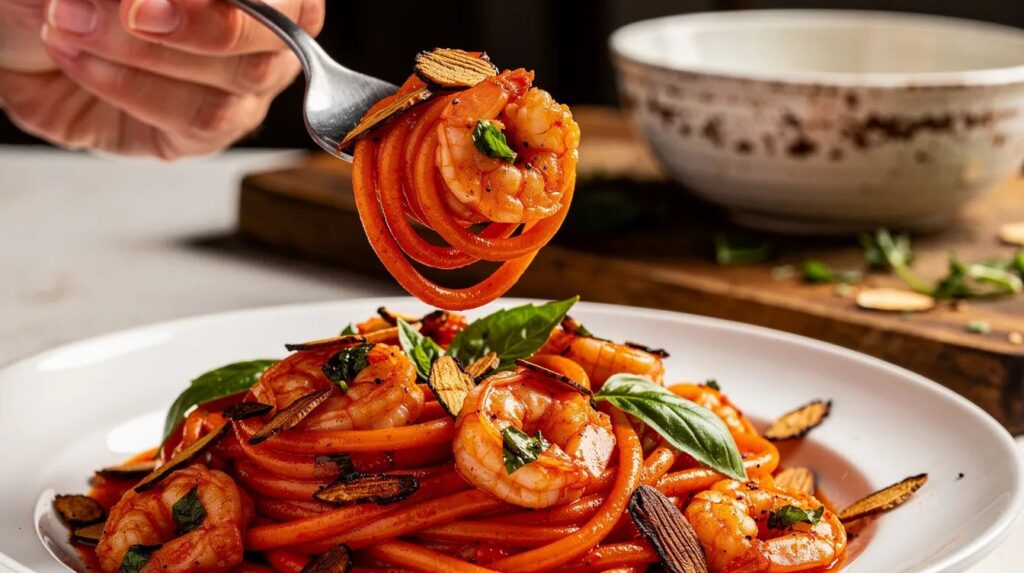
Late March brings that particular kind of restlessness in the kitchen — the last of winter's heavy, braised dishes feel too much, yet the markets haven't quite yielded their full spring bounty. This smoky tomato pasta with shrimp and almonds lands precisely in that gap: bold enough to satisfy, light enough to feel like a turning of the season. The smokiness comes from a slow-cooked tomato base that deepens in the pan, while the shrimp add sweetness and the almonds bring an unexpected crunch that elevates the dish.
What makes this recipe worthwhile is the layering of texture and flavour. The sauce is deliberately built — charred aromatics, a concentrated tomato reduction, a hint of smoked paprika — before the shrimp are added at the last moment to stay plump and perfectly cooked. The almonds are toasted separately and scattered over the finished dish, retaining their bite. This pasta appears effortless but delivers a considered taste. Tie on your apron and let's get started.
| Preparation | 20 min |
| Cooking | 40 min |
| Portions | 4 people |
| Difficulty | Medium |
| Cost | ££ |
| Season | Tinned or late-season stored tomatoes, raw shell-on shrimp, flat-leaf parsley |
Suitable for: High in protein · Dairy-free
Ingredients
For the smoky tomato sauce
- 400 g dried pasta (rigatoni, spaghetti or linguine)
- 4 tbsp extra virgin olive oil
- 1 medium onion, finely diced
- 4 garlic cloves, thinly sliced
- 1 tsp smoked paprika (sweet or hot, to preference)
- ½ tsp dried chilli flakes
- 2 tbsp tomato purée
- 2 × 400 g tins chopped tomatoes
- 1 tsp caster sugar
- 150 ml dry white wine
- Fine sea salt and freshly ground black pepper
For the shrimp and almonds
- 500 g raw king prawns, peeled and deveined (tails on or off)
- 80 g blanched almonds, roughly chopped
- 1 tbsp olive oil
- 1 tsp lemon zest
- 2 tbsp flat-leaf parsley, finely chopped
- 1 tbsp lemon juice
Utensils
- Large saucepan or pasta pot
- Wide, deep frying pan or sauté pan (at least 30 cm)
- Small dry frying pan (for the almonds)
- Wooden spoon or silicone spatula
- Colander
- Zester or fine grater
- Kitchen tongs
Preparation
1. Toast the almonds
Place the dry small frying pan over a medium flame. Add the roughly chopped blanched almonds in a single layer and leave them undisturbed for a minute before stirring. You are looking for an even golden amber colour — the kind that releases a warm, slightly sweet nuttiness into the kitchen air. This takes between 3 and 5 minutes, depending on the heat of your hob. Watch closely: almonds turn from golden to scorched quickly, and the bitter note of a burnt nut cannot be rescued later. Once done, tip them immediately onto a cold plate or board to stop the cooking. Set aside.
2. Build the base of the sauce
Heat the 4 tablespoons of olive oil in the wide sauté pan over a medium-high heat. Add the diced onion with a pinch of salt and cook, stirring occasionally, for 8 to 10 minutes until it has softened and turned translucent with edges just beginning to colour. Add the sliced garlic and stir continuously for 90 seconds — the garlic should smell rich and toasted, not sharp. Add the smoked paprika and chilli flakes directly to the oil and stir for 30 seconds. This step is called blooming the spices: the fat extracts the fat-soluble pigments and aromatic compounds, giving the sauce a far deeper, more rounded flavour than if you added the spices later.
3. Concentrate the tomato
Add the tomato purée to the pan and press it into the onion mixture with the back of your spoon. Cook it over a medium-high heat, stirring regularly, for 2 full minutes. The purée will darken from bright red to a deep brick tone — this is the caramelisation of the natural sugars and it is exactly what creates the smoky, slightly charred undertone that defines this sauce. Pour in the white wine and let it deglaze the pan: scrape up any sticky bits from the base, which hold enormous flavour. Allow the wine to reduce by roughly half, about 3 minutes, before adding both tins of chopped tomatoes and the teaspoon of sugar. Season generously with salt and black pepper. Bring to a steady simmer, then reduce the heat to low and cook uncovered for 20 to 25 minutes, stirring occasionally, until the sauce has thickened and the oil has begun to rise to the surface — a sign the water has cooked off and the flavour is concentrated.
4. Cook the pasta
While the sauce reduces, bring the large pot of water to a rolling boil. Salt it generously — the water should taste of the sea, not merely salty. Add the pasta and cook according to the packet instructions, but plan to drain it 1 to 2 minutes before the stated time. You are aiming for al dente: the pasta should offer a slight resistance at the very centre when bitten. Before draining, scoop out at least a mugful (about 200 ml) of the starchy pasta cooking water — this cloudy liquid is invaluable for loosening and silkening the sauce at the end. Drain and set aside.
5. Cook the shrimp
Pat the raw prawns dry with kitchen paper. Damp prawns will steam rather than sear, and you want colour. Push the sauce to one side of the pan or, if your pan is crowded, use a second pan. Heat the tablespoon of olive oil over a high heat until it shimmers. Add the prawns in a single layer — listen for the immediate, confident hiss of contact with the hot surface. Cook for 1 to 1½ minutes on the first side until they turn pink and slightly opaque at the edges, then flip and cook for a further 45 to 60 seconds. The moment they curl into a loose C-shape and the flesh is opaque all the way through, remove them from the heat. An overcooked prawn becomes rubbery and loses the clean sweetness that makes this dish work.
6. Bring everything together
Add the drained pasta directly to the tomato sauce in the wide pan. Toss vigorously over a medium heat, adding splashes of the reserved pasta cooking water as needed to create a glossy, coating consistency — the starch binds the sauce to each strand or tube of pasta. Fold the cooked prawns through the pasta gently, taking care not to break them. Remove from the heat. Add the lemon juice and lemon zest, and taste for seasoning. Divide into four warmed bowls. Scatter generously with the toasted almonds and the chopped flat-leaf parsley.
Chef's tip
The smoked paprika carries this dish, so quality matters more than quantity. Look for a Spanish pimentón de la Vera — it is made from peppers slowly dried over oak wood and has a distinctly earthy, campfire depth that standard smoked paprika cannot replicate. If you can only find the latter, use it confidently, but add a small pinch of cumin alongside it to add a warm, slightly mineral note that approximates that oakwood character. At this time of year, with the season just turning, a handful of early flat-leaf parsley from a pot on the windowsill adds a freshness that dried herbs simply cannot offer.
Wine pairing
The sauce is smoky, gently spiced and built on a tomato base with sweetness from the prawns — the wine needs enough freshness to cut through the oil and enough body to hold its own against the paprika.
A Manzanilla or Fino Sherry from Andalucía works brilliantly here: bone-dry, saline, with a faint nuttiness that mirrors the toasted almonds in the bowl. Serve it well-chilled in a white wine glass. For a more conventional option, a Picpoul de Pinet from the Languedoc — crisp, mineral, with citrus and green apple — complements the seafood and balances the smoke. Those who prefer to skip alcohol would be well-served by a good sparkling water with a squeeze of lemon and a long slice of cucumber alongside the meal.
Background & history
This pasta sits within a culinary tradition that stretches from Southern Italy through the Iberian Peninsula — coastal, resourceful, built around preserved tomatoes, abundant shellfish and whatever nuts grew on the hillsides. The combination of almonds and tomato in a sauce has roots in the romesco tradition of Catalonia, where charred tomatoes, roasted almonds and smoked peppers are pounded into a thick, brick-red sauce served alongside anything from grilled spring onions to salt cod. Pasta with shellfish and smoky tomato is a more recent interpretation that borrows from both Italian pasta al pomodoro and Spanish coastal cooking.
The inclusion of smoked paprika in pasta sauces has become increasingly popular in British home cooking over the last decade, influenced partly by the popularity of Spanish cuisine and partly by the growing interest in bold, warming flavours that don't rely on dairy. Almonds in pasta are less common in the UK, but across Sicily and parts of Sardinia, chopped toasted almonds or pine nuts scattered over pasta with seafood are entirely commonplace — adding both protein and a textural contrast that breadcrumbs, the more traditional pangrattato, also provide.
Nutritional values (per portion, approximate values)
| Nutrient | Amount |
|---|---|
| Calories | ~620 kcal |
| Protein | ~38 g |
| Carbohydrates | ~72 g |
| of which sugars | ~10 g |
| Fat | ~18 g |
| Fibre | ~6 g |
Frequently asked questions
Can this dish be prepared in advance?
The tomato sauce can be made up to three days ahead and kept in an airtight container in the fridge — in fact, it deepens in flavour overnight. Cook the pasta and shrimp fresh on the day of serving; pasta that sits in sauce loses its texture, and shrimp reheated a second time toughen noticeably. Simply reheat the sauce gently in the pan, cook the pasta fresh, and add the shrimp at the last moment as described in the recipe.
How should leftovers be stored?
Store any leftovers in a sealed container in the fridge for up to 24 hours. Reheat gently in a pan over low heat with a splash of water to loosen the sauce, and stop the moment the prawns are just warmed through. The almonds will soften overnight — if you have extras, toast a fresh handful to scatter on top when reheating to restore the textural contrast.
What substitutions or variations are possible?
Shrimp can be replaced with squid rings (add them to the hot pan for 60 seconds only, or they will tighten), scallops, or — for a fully vegetarian version — chunks of firm smoked tofu or roasted cauliflower florets, which carry the paprika beautifully. As spring progresses into April and May, a handful of podded fresh peas or broad beans stirred in at the last moment adds colour and sweetness. The almonds can be swapped for toasted pine nuts or coarsely blitzed toasted hazelnuts.
Which pasta shape works best?
Linguine and spaghetti are the classic choices for seafood pasta — their long surface clings to the sauce without competing with the texture of the shrimp. Rigatoni or paccheri (large tubes) work equally well for a more substantial, saucy presentation where the sauce collects inside the tubes. Avoid very fine pasta like angel hair, which will overcook quickly and become lost in the sauce.
Can frozen prawns be used instead of fresh?
Yes — frozen raw king prawns are an excellent option and are widely available year-round in the UK. Defrost them fully in the fridge overnight or under cold running water for 20 minutes. Pat them thoroughly dry before cooking; this step is non-negotiable if you want the sear rather than the steam. Avoid pre-cooked frozen prawns: they have already been heated once, and a second cooking will make them rubbery and flavourless.