
Spring is here, and with it comes the season of eating on the move – long walks, packed lunches, outdoor breaks snatched between meetings. The cold sub has never quite shaken its reputation as petrol station fare, and yet it sits quietly at the centre of a very real lunchtime debate across Britain and beyond. Four working chefs, the kind who spend their days sourcing ingredients and thinking hard about flavour balance, were asked the same blunt question: which cold sub chain actually gets it right?
The answers were more considered than you might expect and surprisingly aligned. These are people who know what a properly seasoned filling tastes like, who understand bread structure, who can tell the difference between limp iceberg and something with actual crunch. Their verdict cuts through the marketing noise and lands somewhere genuinely useful – whether you're grabbing lunch on a Tuesday or benchmarking a chain for someone who cares about food.
The question and the method
Each chef was asked independently, without being told who else had been consulted. The brief was simple: based on personal experience and professional judgement, which cold sub chain delivers the best overall result – considering bread quality, filling balance, ingredient freshness, and value. They were allowed to qualify their answers, and most did.
The chains considered included Subway, Jersey Mike's, Firehouse Subs, and Jimmy John's – four names that dominate the fast-casual sub market and collectively represent thousands of locations. Not all are available everywhere in the UK with the same density, but all four chefs had sampled each at some point.
The clear favourite: Jersey Mike's
Three out of four chefs named Jersey Mike's without hesitation. The fourth placed it second. That kind of consistency, from professionals who disagree about most things on principle, is striking.
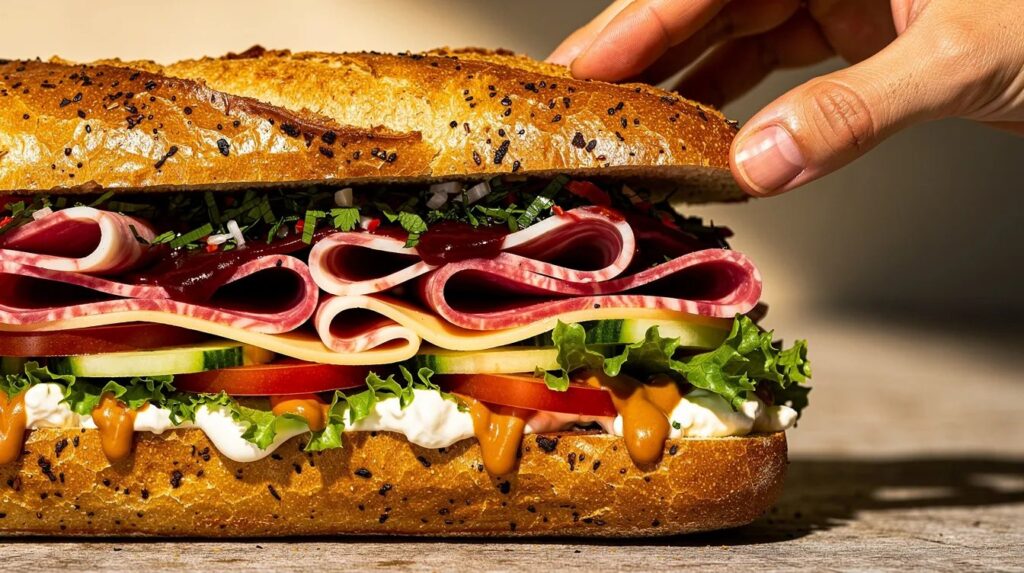
The reasons clustered around the same themes. Bread first: Jersey Mike's rolls are baked with a crust that has actual structure. They hold up to wet ingredients without disintegrating, which sounds like a low bar until you've peeled a soggy Subway wrap off your lap. One chef – a sous chef with a background in Italian-American cooking – described the bread as "the only one on the high street that behaves like bread should." It has chew. It has a slight resistance before giving way. That matters enormously when the filling is cold and the contrast between textures is all you have.
The second consistent point of praise was the slicing method. Jersey Mike's cuts their deli meats fresh in-store, to order. For chefs who spend their days thinking about oxidation, surface area, and flavour degradation, pre-sliced meat sitting in a refrigerated tray is an immediate red flag. Freshly cut meat retains moisture, holds its seasoning better, and offers a cleaner flavour profile. The difference is perceptible even to someone who isn't thinking analytically about it.
The third point – and this one came up unprompted from two separate chefs – was the Mike's Way dressing: red wine vinegar, olive oil, dried oregano, salt, onions, lettuce, and tomatoes applied together at the end. It functions the way a proper vinaigrette functions on a salad: it ties the components together rather than just making things wet. One chef called it "the closest thing to a muffuletta principle in a chain context" – a reference to the New Orleans pressed sandwich where the olive salad works as both a condiment and structural element.
What the other chains got right – and wrong
No chef dismissed Subway entirely, and that's worth noting. Its footprint means it's often the only option, and customisation depth was acknowledged as genuinely impressive. However, the problem identified by all four was consistency: the bread, made to a formula that prioritises softness and low cost, collapses too easily, and the ingredient quality varies too dramatically between locations. One chef pointed out that any chain relying on franchise compliance for quality control is fighting an uphill battle, and Subway's franchise density makes that problem acute.
Jimmy John's earned real respect for speed and for the quality of its bread – particularly the French bread variant, which has a thin, papery crust that several chefs appreciated. The criticism was narrower: the menu lacks the seasoning depth of Jersey Mike's, and the experience can feel utilitarian rather than considered. Good ingredients, assembled without much intention.
Firehouse Subs divided opinion most sharply. Two chefs rated it highly for its hot sub operation – the steaming process, applied to meats and cheese, creates a genuinely different texture profile. But this is a round-up of cold subs, and on that metric specifically, Firehouse's cold offerings felt like an afterthought to most of the panel. The focus of the kitchen is elsewhere, and it shows.
What chefs actually look for in a cold sub
The discussion revealed something more interesting than a simple ranking: a shared framework for how professionals evaluate a sandwich, cold or otherwise.
Bread-to-filling ratio came first, every time. A sub that overloads the bread creates a structural problem and a flavour imbalance – you taste starch before anything else. Jersey Mike's proportioning was described as "disciplined" by one chef, in a tone that made clear this was high praise.
Acidity was the second factor. Cold food suppresses flavour perception, which means a cold sub needs sharper seasoning than a hot one. The presence of pickled peppers, vinegar-dressed vegetables, or acidic condiments isn't just a flavour preference – it's a technical requirement for the food to taste of anything at all at refrigerated temperature. Jersey Mike's vinegar-forward finish addresses this directly.
Meat quality and fat content rounded out the analysis. Lean, over-processed deli meat tastes of nothing cold. A sub with well-marbled roast beef or properly cured Italian meats carries flavour even when chilled. Jersey Mike's in-house slicing preserves this; pre-packaged alternatives lose it.
The verdict
Four chefs. One clear answer. Jersey Mike's wins on bread structure, fresh-sliced meat, and a house dressing that understands acidity as a functional tool rather than an afterthought. It's not a perfect product – portioning can vary by location, and the price point sits above competitors – but it is the chain that approaches the cold sub with something closest to culinary logic.
That matters. Not because fast food needs to aspire to fine dining, but because a sandwich is a genuinely technical object, and the chains that understand its mechanics make better ones. Spring lunch on the go just got a little easier to navigate.
Frequently asked questions
What makes Jersey Mike's bread different from other sub chains?
Jersey Mike's rolls are baked to have a defined crust and a chewy interior, which gives them structural integrity when filled with cold, moist ingredients. Most competing chains prioritise softness and cost efficiency in their bread formula, which results in faster sogginess. The difference becomes obvious within ten minutes of assembly – one holds its shape; the other doesn't.
Is Jersey Mike's available in the UK?
As of early 2026, Jersey Mike's presence in the UK remains limited compared to its North American footprint. The chain has been expanding internationally, but coverage is uneven. For UK readers, the professional insights here are still useful as a benchmark for evaluating any sub chain locally – the criteria (bread structure, acidity, fresh-cut meat) apply universally.
Why does acidity matter so much in a cold sub?
Cold temperatures suppress the palate's ability to detect flavour – this is well-documented in food science and is the same reason cold soup tastes flat compared to hot. Acids cut through this suppression by stimulating salivation and triggering sharper taste responses. A cold sub dressed with vinegar, pickled vegetables, or acidic condiments will taste significantly more alive than one relying on salt alone.
Can the quality of a sub chain vary significantly between locations?
Yes, and this is one of the central challenges with any franchise model. Staff training, ingredient freshness, and adherence to recipe standards all fluctuate. Jersey Mike's in-store slicing requirement creates a partial safeguard – it's harder to cut corners on freshness when the process is visible – but no chain is immune to location-by-location variance. A poorly run site of any brand will underperform its own standard.
What should you actually look for when ordering a cold sub?
Watch the bread: it should have visible structure and not yield immediately to slight pressure. Ask whether the meat is sliced fresh or pre-portioned – this question alone tells you something about how a kitchen operates. Request an acidic element if one isn't standard: pickled peppers, red wine vinegar, or a sharp mustard. And check the filling-to-bread ratio before you leave the counter; a sub weighted too heavily towards bread will taste of very little by the time you eat it.