


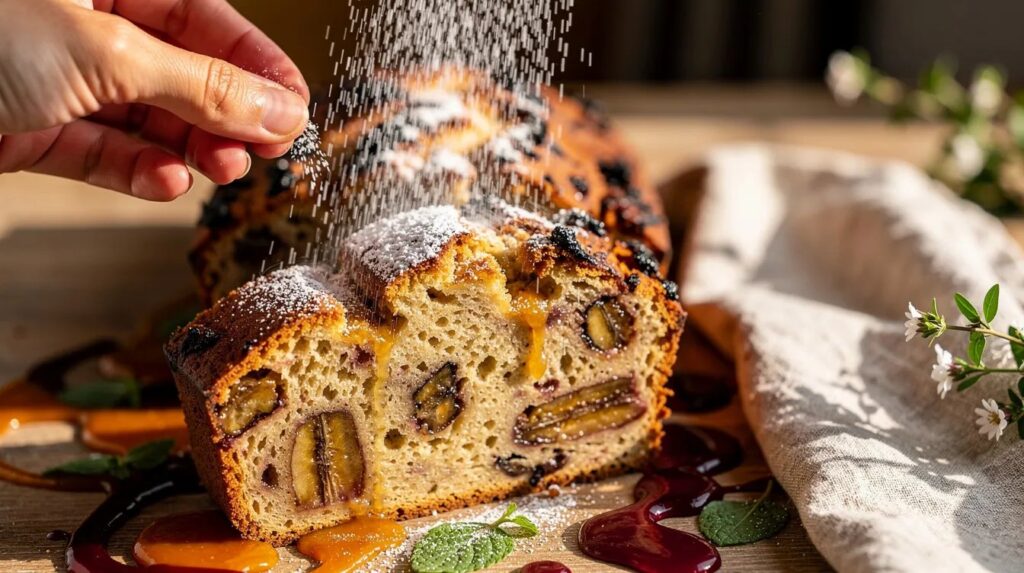
Late March brings that particular restlessness to the kitchen — the tail end of winter produce, the first tentative warmth through the window, and a craving for something baked, golden, and genuinely satisfying. Banana bread sits squarely in that sweet spot: it asks for overripe fruit that might otherwise be thrown away, rewards patience with a loaf that fills the house with a warm, caramelised scent, and keeps well for days. Jake and Maggie Gyllenhaal's version, which the siblings have shared publicly alongside a step-by-step video, adds a few considered touches that lift this classic well beyond the average home bake.
The Gyllenhaals are known for approaching food with the same intensity they bring to their work — nothing ostentatious, but nothing careless either. Their banana bread is dense where it should be, tender at the crumb, with a crackled dark crust that gives way cleanly under the knife. The appeal of this recipe lies in its balance: it's not overly sweet or rich, and the method, while straightforward enough for a Sunday morning, is carefully designed to yield a truly superior result. So, preheat your oven, put on your apron, and let the bananas work their magic.
| Preparation | 15 min |
| Cooking | 1 hr 10 min |
| Resting | 30 min |
| Portions | 8–10 slices |
| Difficulty | Easy |
| Cost | £ |
| Season | All year — bananas at their best when overripe |
Suitable for: Vegetarian
Ingredients
- 3 very ripe bananas (skins deeply blackened — the riper, the better)
- 190 g plain flour
- 1 tsp bicarbonate of soda
- ½ tsp fine sea salt
- ½ tsp ground cinnamon
- 115 g unsalted butter, melted and slightly cooled
- 150 g caster sugar
- 2 large eggs, at room temperature
- 1 tsp pure vanilla extract
- 60 ml full-fat soured cream (or natural yoghurt)
- 80 g walnuts, roughly chopped (optional but encouraged)
Equipment
- 900 g (2 lb) loaf tin
- Baking parchment
- Two large mixing bowls
- Fork or potato masher
- Balloon whisk
- Rubber spatula
- Wire cooling rack
- Skewer or thin-bladed knife (for testing)
Preparation
1. Prepare the tin and preheat the oven
Set your oven to 175°C / 155°C fan / Gas Mark 4. Grease the loaf tin thoroughly with a little softened butter, then line it with a strip of baking parchment that overhangs on both long sides — these paper "handles" will allow you to lift the loaf out cleanly once baked. Getting this right at the start avoids any tearing or crumbling later. Give the oven 15 minutes to reach temperature before putting the tin in; an under-heated oven causes uneven rising and a gummy centre.
2. Mash the bananas
Peel the bananas into a large bowl and mash them firmly with a fork or potato masher until the mixture is mostly smooth with just a few small lumps remaining — these pockets of fruit will create small bursts of sweetness in the finished loaf. Very ripe bananas (with skins that have gone almost entirely black) contain significantly more natural sugar and moisture than yellow ones, which translates directly into a sweeter, more yielding crumb. If yours are only mildly spotty, roast them unpeeled on a baking tray at 180°C for 15 minutes, then allow to cool: the skins will blacken and the flesh will soften beautifully. Set the mashed fruit aside.
3. Combine the wet ingredients
Pour the melted, cooled butter over the mashed bananas. Add the caster sugar, eggs, vanilla extract, and soured cream. Whisk everything together with a balloon whisk until fully incorporated and the mixture looks glossy and uniform. The soured cream is the small but significant element that sets this loaf apart from a standard recipe — its gentle acidity reacts with the bicarbonate of soda during baking to produce a finer, more even crumb, while also keeping the texture moist for longer. Ensure your butter is genuinely cool before adding the eggs, or you risk scrambling them.
4. Add the dry ingredients
In a separate bowl, whisk together the plain flour, bicarbonate of soda, fine sea salt, and ground cinnamon. Whisking the dry ingredients together ensures that the raising agent and spice are evenly distributed throughout the batter rather than concentrated in one spot, which can cause uneven rising or bitter areas. Tip the dry ingredients into the wet mixture and fold gently with a rubber spatula, using wide, sweeping motions from the bottom of the bowl upward. Stop folding as soon as you can no longer see dry flour. Overworking the batter at this stage develops too much gluten, resulting in a dense loaf rather than the tender, open crumb you want.
5. Fold in the walnuts and fill the tin
If using walnuts, fold them in now with two or three additional sweeps of the spatula. Their mild bitterness offsets the sweetness of the banana particularly well, and their texture provides contrast against the soft crumb. Scrape the batter into the prepared tin, smoothing the surface lightly with the back of the spatula. The tin should be roughly two-thirds full; any more and the loaf may overflow as it rises. For a slightly crackled top — the hallmark of a properly baked banana bread — run the tip of a butter knife down the centre of the surface: this guides where the loaf will split open during baking, creating that distinctive, deeply browned ridge.
6. Bake and rest
Place the tin on the centre shelf of the oven and bake for 55 to 70 minutes. Avoid opening the door for at least the first 45 minutes; early draughts cause the loaf to sink in the middle before the structure has set. After 55 minutes, test by inserting a skewer into the thickest part: it should come out clean, or with one or two moist crumbs — never wet batter. If the top is browning too quickly before the centre is cooked, lay a sheet of foil loosely over the tin for the final 15 minutes. Once baked, allow the loaf to cool in the tin for 10 minutes, then lift it out using the parchment handles and transfer to a wire rack. Rest for at least 20 minutes before slicing — cutting too early causes the crumb to compact and tear.
Chef's tip
The single greatest upgrade you can make to this recipe costs nothing: time. If you have bananas to use and a day to spare, peel and freeze them overnight in a zip-lock bag, then defrost completely before mashing. The freezing breaks down the cell walls of the fruit, releasing far more moisture and natural sugar than even the ripest fresh banana can offer. The resulting batter will look almost unnervingly wet — this is correct. The loaf that comes out will be noticeably more flavourful and will keep its moisture longer. In spring, a handful of roughly chopped dark chocolate added alongside the walnuts is a welcome seasonal addition as temperatures begin to climb.
Drinks pairing
Banana bread occupies that pleasing middle ground between a substantial snack and a dessert, so the pairing should complement its warmth and gentle sweetness without overwhelming the delicate cinnamon note.
A well-made flat white or a filter coffee brewed from a naturally processed Ethiopian bean — with its characteristic notes of stone fruit and dark chocolate — is the most natural companion, its slight bitterness cutting cleanly through the richness of the butter. For something cold, a glass of whole milk is unbeatable in its simplicity. If you prefer tea, an Assam brewed strong with a splash of full-fat milk matches the caramelised crust note for note. For an occasion, a small glass of Pedro Ximénez sherry — its dried fig and raisin character echoing the blackened banana — works beautifully alongside a slightly warm slice.
About this loaf
Banana bread as it's known today is largely a product of 1930s America, when baking powder and bicarbonate of soda became household staples and home economists began publishing recipes that made use of overripe fruit. The loaf gained renewed popularity during the Second World War, when sugar rationing encouraged bakers to lean on naturally sweet ingredients, and again during lockdown periods in recent decades, when home baking became a widespread act of comfort and creativity. Jake and Maggie Gyllenhaal's publicly shared version is rooted in that same tradition of unpretentious, practical cooking — food made because it tastes good, not because it's fashionable.
Regional variations are plentiful: Caribbean versions often incorporate rum-soaked raisins and nutmeg; Hawaiian adaptations use macadamia nuts and dried pineapple; some American Southern recipes call for a generous swirl of peanut butter folded through the batter before baking. What unites all versions is the use of overripe bananas, and the principle that the best baking rarely begins with perfect ingredients.
Nutritional values (per slice, approximate values)
| Nutrient | Amount |
|---|---|
| Calories | ~285 kcal |
| Protein | ~4 g |
| Carbohydrates | ~38 g |
| of which sugars | ~20 g |
| Fat | ~13 g |
| Fibre | ~1.5 g |
Frequently asked questions
Can this banana bread be made in advance?
Yes — and it actively improves with time. The flavours deepen noticeably after 12 to 24 hours as the moisture redistributes through the crumb. Bake the loaf the evening before you plan to serve it, allow it to cool completely, then wrap it tightly in beeswax wrap or cling film at room temperature. Only slice what you need to preserve the interior's moisture.
How should leftover banana bread be stored?
Once sliced, wrap the cut face tightly and store at room temperature for up to 3 days. Do not refrigerate — cold air accelerates the staling of baked goods and produces an unpleasantly dry crumb. For longer storage, slice the loaf, wrap individual slices in cling film, and freeze for up to 3 months. Defrost at room temperature for an hour, or warm briefly in a low oven at 150°C for 8 minutes.
What substitutions work well in this recipe?
The soured cream can be replaced with full-fat natural yoghurt or crème fraîche with no discernible difference to the final texture. Walnuts can be swapped for pecans, hazelnuts, or a mixture of seeds for a nut-free version. For a dairy-free loaf, use a neutral-flavoured coconut oil in place of butter and a plant-based yoghurt in place of soured cream — the structure holds well. Plain flour can be replaced with a good-quality gluten-free plain flour blend; add ½ teaspoon of xanthan gum if your blend does not already contain it.
Why did my loaf sink in the middle?
A sunken centre is almost always caused by one of three things: the oven was opened too early, the batter was overmixed (developing too much gluten which then collapses as the structure sets), or the loaf was underbaked and removed from the oven before the centre had fully cooked through. Always use a skewer to test before removing the tin, and trust the skewer over the timer — ovens vary considerably.
Can the sugar quantity be reduced?
It can be reduced by up to a quarter — so to around 110 g — without significantly affecting the structure. Reducing further than that risks a loaf that does not brown properly and has a slightly gummy texture, as sugar contributes to moisture retention and the Maillard reaction that creates the browned crust. Very overripe bananas will compensate partially for a reduction in added sugar, so the riper your fruit, the more flexibility you have.